Four levels of making sense
A page of numbers is not automatically understanding. The Data–Information–Knowledge–Wisdom (DIKW) framework offers one way to describe how facts can acquire meaning through context, interpretation, and judgment.
1. Data
Data are recorded observations or measurements before we fully interpret them. A number written on a note may have little meaning until we know what it measures.
2. Information
Information connects data to context. A temperature reading becomes more useful when we know its unit, time, location, and the instrument used.
3. Knowledge
Knowledge involves understanding relationships and using information to explain or predict something, while still acknowledging limitations.
4. Wisdom
Wisdom asks how that understanding should guide action: what matters, what could go wrong, and who may be affected by a decision.
A helpful model, not a universal law
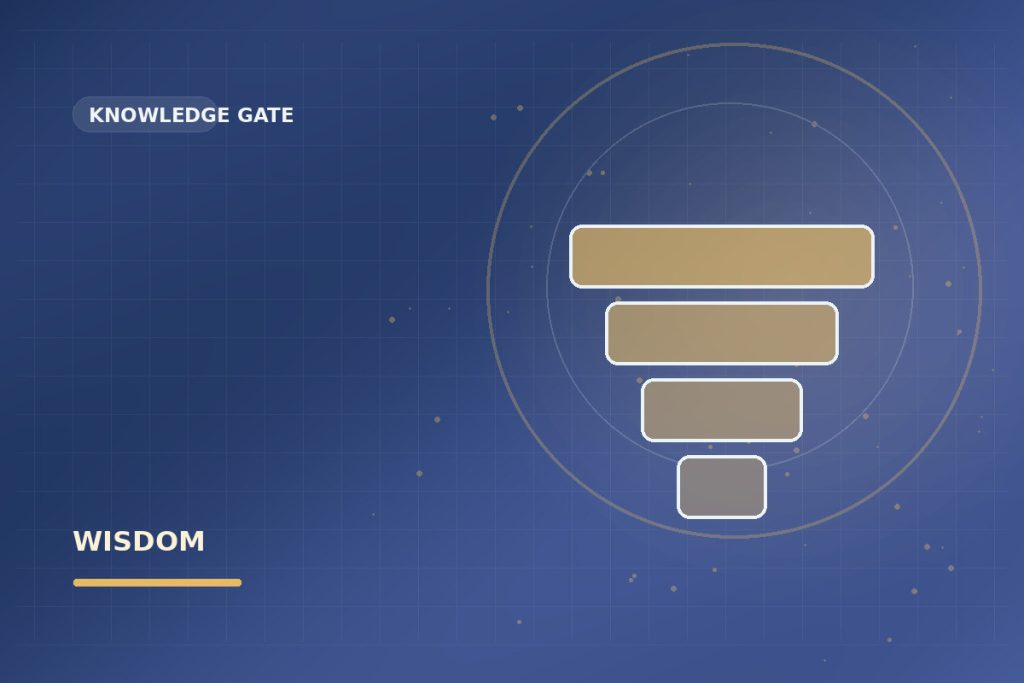
The DIKW pyramid is a teaching model rather than a settled scientific description of how every mind or organization works. Real learning is often cyclical: judgment influences which information we seek next, and new data can overturn an old conclusion.
The most important lesson is practical. Collecting more data is not always progress. Better questions, useful context, sound reasoning, and ethical judgment are what allow information to become genuinely valuable.
About this article: Demonstration editorial content informed by Call for Entry into KnowledgeGateint: A Hub of Informational Reality, attributed in the provided manuscript to Dr. Prosanta Kumar Roy. It is not a verbatim reproduction or an independently verified statement by the author. Review citations and replace or approve this text before public launch.